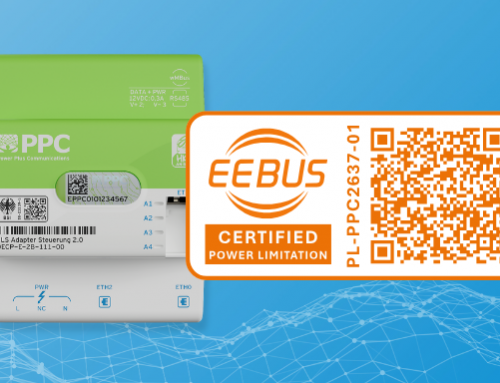
The smart meter roll-out is progressing – yet, despite the relevant regulatory requirements, metering for industrial and commercial customers has so far often taken place via a separate, parallel infrastructure that bypasses the smart metering system. The upcoming iRLMsys solutions are designed to close precisely this gap.
From RLM to iRLMSys
Metering point operators with industrial and commercial customers are familiar with the situation. Alongside setting up the infrastructure for smart metering systems, the operation of registered power metering (RLM) must also be ensured. Two systems, two communication channels, and the associated additional costs for installation, operation and maintenance. Furthermore, RLM measurements do not yet benefit from the cyber security that the smart metering system can provide.
The legislator has already drawn the necessary conclusions: for the relevant installation categories, the mandatory roll-out of smart metering systems is set to begin by 2028 at the latest, and the Metering Point Operations Act stipulates that, by the end of 2028, 90 per cent of all newly installed RLM metering points must already be connected via the SMGW. The regulatory direction has thus been set, providing planning certainty for the roll-out of RLM metering points.
Background to RLM
So what is new here? Unlike domestic meters – also known as standard load profile (SLP) meters – which are designed to record total consumption over a longer period, for example for annual billing, an RLM meter (registered load profile measurement) has always measured electricity consumption at short, regular 15-minute intervals. This gives the network operator an accurate picture of when and how much electricity is required and consumed. RLM customers are characterised by high energy consumption and include, for example, industrial plants, data centres or larger commercial facilities. Due to this high consumption, the requirement for the completeness of the metering data is even greater than for SLP customers.
This data is indispensable for network operators and suppliers – it forms the basis for network planning, billing and flexibility management.
Certification for iRLMsys is in full swing
PPC has made significant progress with the certification of the SMGW in accordance with the new PP V2.0 security profile and the new Technical Guideline TR-03109-1 V2.0. Once certification is complete, metering point operators will be able to communicate directly with RLM meters via the secure CLS channel.
The combination of the SMGW and an RLM meter with a CLS module forms an iRLMSys. For metering point operators, this opens up the possibility of using the existing iMSys infrastructure for industrial and commercial customers in future. Instead of parallel communication channels, a unified architecture for metering, data transmission and operation is created.
Existing load profile meters do not necessarily need to be replaced for this purpose. Depending on the meter type, a plug-in adapter is sufficient to connect existing RLM meters to the SMGW infrastructure. The existing installation thus remains largely untouched, and existing hardware can continue to be used.
This connection brings further advantages: in the event of a temporary WAN outage, the metering point operator can, on the one hand, re-query missing meter readings via the CLS channel, ensuring that meter readings are recorded very reliably and consistently via the iMSys infrastructure. On the other hand, the Smart Meter Gateway takes on the role of the central time server. To this end, the RLM meter will in future obtain its system time directly via the CLS interface.
Interoperability from the outset
As with all aspects of a scalable roll-out, cross-vendor interoperability is a top priority for PPC when it comes to iRLMsys and has been an integral part of the development process from the very beginning. For this reason, we are working closely with meter manufacturers who are already developing CLS modules for RLM meters, in parallel with our own development work.
Once certification is complete, a solution will be available that enables RLM meters to be seamlessly connected to smart metering systems, allowing metering point operators to utilise the iMSys infrastructure and comply with legal requirements quickly and efficiently.