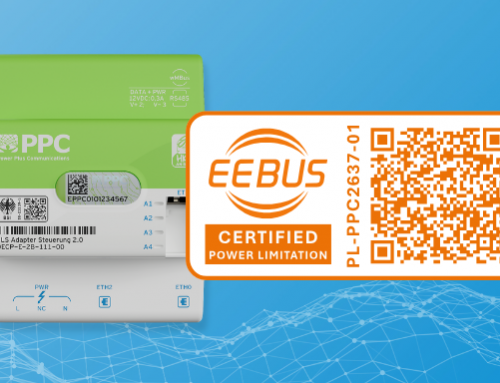
Dynamic electricity tariffs offer a simple way of giving end customers immediate access to the benefits of smart metering systems (iMSys). However, the transmission of metering data relevant to billing is only part of what the iMSys is capable of. PPC and Solar Manager have now successfully demonstrated that tariff and price information can also be transferred to the property and used there for local optimisation. The existing range of processes surrounding the iMSys is thus expanded to include another important use case.
The EEBUS standard, which is well-established across the industry, is used for on-site communication. Specifically, the TOUT (Time of Use Tariffs) use case is utilised here. This enables the exchange of time-dependent tariff information, such as dynamic electricity prices based on spot market prices and dynamic grid charges.
Upstream, both suppliers and network operators can provide the relevant tariff information. This is then transmitted to the local energy management system via the smart meter gateway. There, the tariff information can be used, for example, to optimise wallboxes, battery storage systems or other flexible consumers. The combination of market and grid signals is particularly relevant here: in future, a home energy management system will thus be able to base its optimisation not only on low electricity prices, but also on dynamic grid charges. This means that the grid perspective is also taken into account and utilised in price-based optimisation.
This is a key point for the energy sector of tomorrow, as the market price and the local grid situation do not necessarily correspond. A low electricity price on the spot market says nothing about how heavily the local distribution network is utilised at that moment. If dynamic network charges or network-side price signals are taken into account, energy management can therefore combine both perspectives and thus control the network proactively in a way that benefits the grid.
The benefits for network operators
For network operators, this provides practical evidence that the infrastructure of their metering point operators (MPOs) can be used for more than just meter readings and direct control. It can be used to transmit (dynamic) price signals to individual properties, local grids, regions or grid areas. This creates an additional mechanism for incorporating local grid conditions into the optimisation of flexible consumers before direct control intervention becomes necessary.
Looking ahead, this initial implementation of TOUT demonstrates that the actual optimisation of electricity consumption, generation and storage based on dynamic tariffs is feasible in practice. EEBUS ensures interoperability between the participating stakeholders, thereby laying the groundwork for rolling out the concept across the industry.
Joint project development
Specifically, as part of the collaboration, the implementation of the TOUT between PPC’s CLS adapter control system and Solar Manager’s energy management system was tested.
PPC is providing the test equipment, including a firmware prototype and the MPO test systems. Solar Manager is responsible for data acquisition and processing. The first practical implementation of the use case has so far taken place in the laboratory. Field trials are also planned. A particular highlight of the collaboration is the rapid and agile development of the project by both partners.