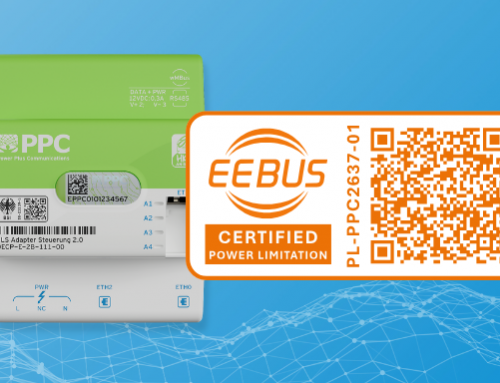
Together with thirteen partners, PPC successfully tested the EEBUS SHIP Pairing Service at this year’s EEBUS Summit. The process enables control connections without an additional on-site appointment and is an important component of a scalable control rollout.
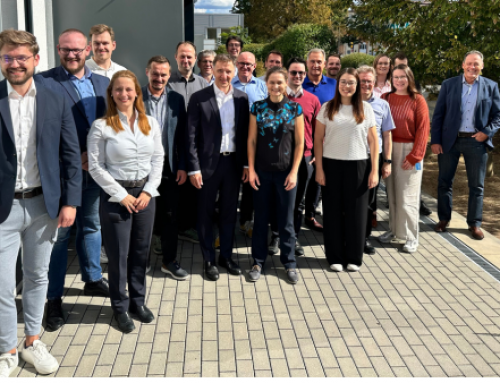
Mannheim/Cologne, 5 October 2026 – Power Plus Communications (PPC) is further expanding the interoperable partner ecosystem around its SMGWplus. At the EEBUS Summit & Plugfest 2026 in Cologne, PPC recognized thirteen partner companies whose systems successfully completed interoperability tests with the SMGWplus or the CLS Adapter Steuerung. The tests focused on the EEBUS SHIP Pairing Service and the reliable transmission of control commands. The EEBUS SHIP Pairing Service automatically and securely connects the SMGWplus or other control units with controllable devices or their Home Energy Management Systems (HEMS).
As the number of decentralized energy assets and controllable consumption devices grows, so does the need for standardized, vendor-independent commissioning processes. These processes must enable simple and efficient commissioning for both installers on the customer side and metering point operators and distribution system operators. The metering point operator’s control units must be reliably paired with the customer’s consumption or generation devices and energy management systems. VDE FNN has defined the SHIP Pairing Service as the target process for this purpose.
Why the EEBUS SHIP Pairing Service makes a difference in the control rollout
Without the EEBUS SHIP Pairing Service, this step often involves additional effort. The control unit and the controllable device must be networked and securely authenticated with each other. The required local manual confirmation can make an additional on-site appointment necessary. The EEBUS SHIP Pairing Service automates this pairing process.
During installation of the controllable device, the installer records its EEBUS access credentials. These are then transferred via the designated registration process. Once the metering point operator receives the order to establish controllability, the credentials can be loaded into the control unit. They contain a digital key, known as a secret. This allows the control unit to authenticate itself automatically to the controllable device or energy management system. The two systems can then pair automatically, eliminating the need for additional manual interaction on site.
Interoperability with SMGWplus demonstrated at the EEBUS Summit
PPC tested the process together with manufacturers of various energy management systems and energy devices. Thirteen partner solutions successfully demonstrated interoperability with the SMGWplus and the CLS Adapter Steuerung. In addition to secure EEBUS SHIP Pairing, the transmission of control signals to these systems was also tested.
The EEBUS SHIP Pairing Service was successfully tested with the following partners at the EEBUS Summit:
- Beeker Tech
- BOSCH Thermotechnik
- Consolinno Energy
- enjoyelec B.V.
- Enyo
- Fronius
- Hosenso
- KOSTAL Solar Electric
- MENNEKES Elektrotechnik
- Reduxi
- Symcon
- TQ Systems
- Vaillant
“When millions of controllable devices are integrated into the energy system, their commissioning cannot depend on individual manual steps. Together with our partners, automated SHIP Pairing demonstrates that this process can work in a standardized, simple and vendor-independent way. What matters is not only connecting the devices, but ensuring reliable control during operation,” says Janosch Wagner, CTO of PPC.
Julian Zilg, Team Lead CLS Products, adds: “Automated pairing is designed in particular to reduce the effort required at the interface between installers, metering point operators and system operators. The fact that more than twelve partners have already carried out and successfully completed interoperability tests together with us shows how important the SHIP Pairing Service is for the control rollout.”
The interoperability tests are part of the PPC connect initiative. As part of this initiative, PPC works with manufacturers to test the interaction of different hardware and software components with its own smart metering and control technology. The companies recognized at the EEBUS Summit receive the PPC connect Award for successfully demonstrated interoperability.