Following three years of intensive collaboration, the CACTUS project (Connect, Assist & Control: Transparency and System Stability for Smart Energy Systems) was successfully completed on 30 June 2026.
The project was prompted by the growing demands placed on distribution networks in the wake of the energy transition. With the increasing electrification of transport and heating, as well as the expansion of renewable energy, more and more energy flows are shifting to low-voltage grids. At the same time, real-time measurement data on the current grid status is often not available at this level. Without this transparency, the only option is often a resource- and cost-intensive grid expansion in response to rising demands.
This is precisely where CACTUS came in. The aim of the project was to optimise grid utilisation and energy use in the distribution network by tapping into flexibility potential, particularly in charging clusters and neighbourhoods. With the help of improved grid transparency, forecasts and virtual price signals, the aim was to support grid operators in evaluating further installations whilst taking their flexibility into account, identifying forecast grid bottlenecks at an early stage and reducing them through appropriate incentives. Among other things, this was intended to enable higher connection capacities in the charging infrastructure without the immediate need for additional resources for grid expansion.
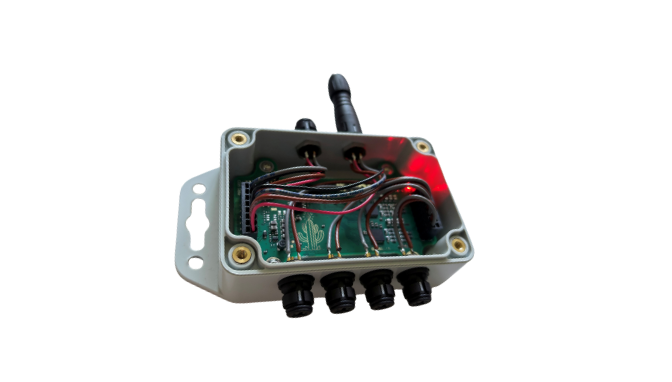
Figure 1: Prototype of a scalable real-time measurement system for the low-voltage grid
As PPC, our focus was on developing a prototype scalable real-time metering technology for the low-voltage grid. Working alongside grid operators, we first defined the requirements, then developed the hardware and software, and supported the solution through to both system integration and successful field testing in Schwäbisch Hall. This enabled us to gain valuable insights into its use under real-world conditions and lay important foundations for the future digitalisation of distribution networks.
For us, the completion of CACTUS is therefore far more than simply the successful conclusion of a research project. The results obtained form an important basis for operating distribution networks more efficiently, transparently and flexibly in future, thereby providing sustainable support for the energy transition.
We would like to extend our heartfelt thanks to all project partners for their trusting and successful collaboration.
The CACTUS innovation project was funded by the Federal Ministry for Economic Affairs and Climate Action.