The bottleneck in device installation
With the ramp-up in the installation of heat pumps and wall boxes, grid operators are facing a new challenge: each of these systems must be controllable in the future. Previous concepts often envisage complex hardware installations at this point in order to dim a system in accordance with Section 14a of the German Energy Industry Act (EnWG). This usually requires the installation of a separate control box and associated cabling. This presents further challenges for field technicians. Space in the meter cabinet is limited, installation time per customer increases, and the availability of additional hardware components is a cost factor. The difficulty here? If a new physical device has to be installed for each controllable consumer, the mass rollout is slowed down by the amount of material and time required. Successful integration of consumption devices must therefore reduce complexity on site—and map control processes digitally as far as possible.
SMGWplus: Software update instead of hardware replacement
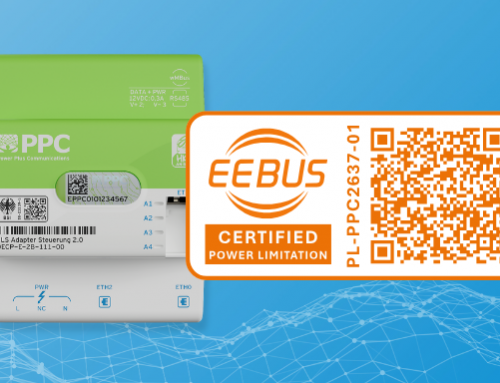
This is precisely where the SMGW control concept comes in. PPC implements this in the form of SMGWplus – taking the functionality of existing PPC Smart Meter Gateways to a new level of integration. The key advantage: the control function is no longer performed by a separate control unit, but is handled directly by the Smart Meter Gateway. A software update enables PPC smart meter gateways to forward control commands directly to the customer’s system using the digital interface. The PPC smart meter gateway forwards the control signals from the distribution network operator’s backend to controllable systems in the EEBUS protocol.
For network operators and MSBs, this means a massive gain in speed and resource efficiency. Instead of having to deploy new control hardware in the field, the edge computing capabilities of the installed smart meter gateway are utilized.
Proven in practice at Bayernwerk
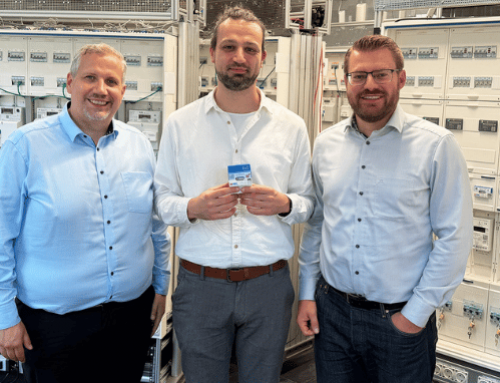
The use of this streamlined approach at Bayernwerk demonstrates that it delivers the necessary cost efficiency and predictability. In collaboration between Bayernwerk and PPC, it was demonstrated that control from the SMGW functions smoothly in accordance with the requirements of Section 14a of the German Energy Industry Act (EnWG) and that the secure integration of controllable consumption devices and generation plants is guaranteed – without any additional hardware in the meter cabinet.
Conclusion: The smart way forward
So how can the problems described at the beginning—limited space, long installation times, and rising hardware costs—be solved? The answer is clear: The future of direct control belongs to the Smart Meter Gateway. The official launch date is already set for 2026. This solution reduces complexity on site and offers network operators an optimal way to efficiently implement the requirements of Section 14a of the German Energy Industry Act (EnWG) and Section 9 of the German Renewable Energy Sources Act (EEG) without being slowed down by new material requirements.
At the same time, this newly developed solution shows how much momentum and innovative power there currently is in the smart grid sector. We at PPC are therefore working consistently to make these new ideas and developments available to all market participants – and thus to the entire smart grid – as quickly as possible.