













As part of the unIT-e² collaborative project, PPC is working with 28 project partners—including grid operators, automotive companies, and research institutions—to develop solutions for the smart and secure integration of e-mobility into current and future infrastructures. The focus: to develop and test interoperable solutions that form the foundation for successful sector coupling.
To this end, unIT-e² is creating real-world laboratories that provide a neutral framework for project partners, some of whom may be competitors. Under scientific guidance, this allows them to collaborate on solutions without having to set aside their own corporate goals.
The energy transition in Germany is leading to a fundamental restructuring of the energy system. On the one hand, electricity generation is becoming increasingly volatile, and on the other hand, electricity demand in the heating and mobility sectors is rising due to increasing electrification. If these two sectors are integrated into the power grid, the volatility in electricity generation can be counteracted with flexible solutions such as heat pumps and electric vehicles. However, this requires bringing additional stakeholders on board. To ensure a sustainable market ramp-up of electric mobility, the unIT-e² project addresses not only customer-related but also grid-related issues
To ensure that this complex topic is examined from all angles, the unIT-e² consortium has a broad-based composition. A closely coordinated approach aims to integrate not only technical and economic aspects but, above all, legal and social perspectives into the solutions developed. The following steps are part of the project:
The procurement and utilization of flexibility potential on the consumer side (e.g., charging infrastructure or heat pumps) are crucial for project implementation. This is precisely where PPC contributes to the project.
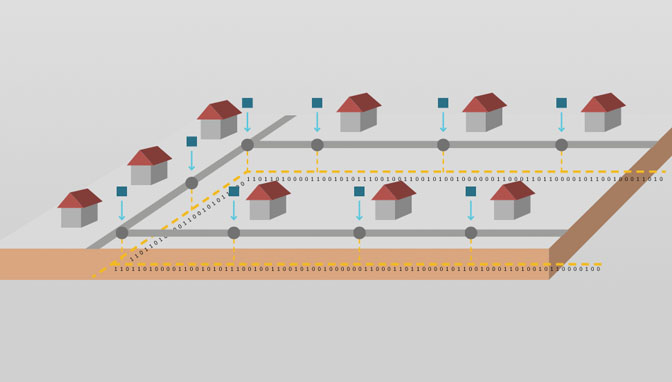
To ensure that charging infrastructure and other controllable consumption devices can be integrated into the power grid in a way that benefits the grid and aligns with the electricity market, the smart metering infrastructure must be further developed. The standardized connection of electricity consumers and their control is achieved through smart metering systems. The necessary hardware and software developments are implemented and tested as prototypes in real-world laboratories.
The following is to be implemented via the smart meter gateway:
The unIT-e² project is funded by the BMWK and the BMU for three years as part of the “Elektro-Mobil” call for proposals. The project is managed by the German Aerospace Center (DLR). Project management is handled by Forschungsgesellschaft für Energiewirtschaft mbH (FfE) in Munich.